
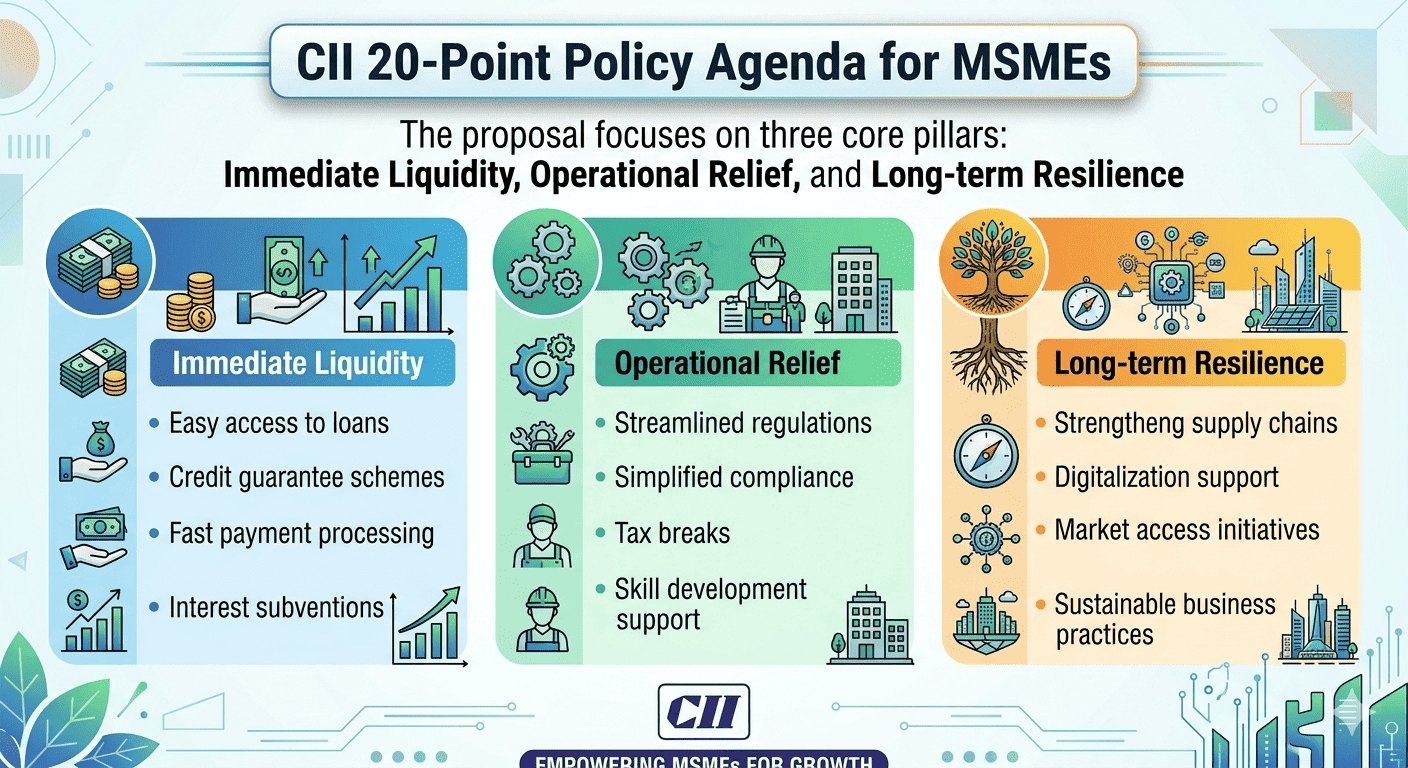
The Confederation of Indian Industry (CII) has recently submitted a strategic 20-point policy agenda to the Government of India and the Reserve Bank of India (RBI). This comprehensive roadmap is designed to shield the Indian economy—and specifically the MSME sector—from the cascading effects of the ongoing West Asia crisis and global supply chain disruptions (CII 20-Point Policy Agenda for MSMEs).
For small business owners, these recommendations represent a proactive shift toward “crisis-proofing” operations through targeted liquidity, credit facilitation, and operational flexibility.
Key Highlights of the CII 20-Point Policy Agenda for MSMEs
The proposal focuses on three core pillars: Immediate Liquidity, Operational Relief, and Long-term Resilience. Below are the most impactful points for the MSME community:
1. Conflict-Linked Emergency Credit Line (CL-ECLGS)
Borrowing a successful page from the pandemic era, CII has proposed a Conflict-Linked Emergency Credit Line Guarantee Scheme. This would provide collateral-free working capital to MSMEs and exporters hit by rising input costs or shipping delays.
2. Three-Month Loan Moratorium
To prevent temporary cash flow hurdles from becoming permanent failures, the agenda seeks a three-month moratorium on loan repayments. This includes a “restructuring window” to give businesses breathing room without being immediately tagged as Non-Performing Assets (NPAs).
3. Enhanced Working Capital Limits
CII recommends that banks be empowered to reassess and increase cash credit limits by up to 20% for viable units. This is particularly crucial for export-oriented MSMEs facing longer payment cycles due to maritime disruptions.
4. Fast-Tracking GST & Duty Refunds
Liquidity is often locked in government dues. The agenda calls for the fast-tracking of pending GST refunds, duty drawback claims, and RoDTEP (Remission of Duties and Taxes on Exported Products) payments to inject immediate cash into the ecosystem.
5. Waiver of Administrative Charges
To lower the cost of doing business, the proposal suggests a temporary waiver of loan processing fees, documentation costs, and foreign exchange handling charges for smaller enterprises.
Strategic Shift: Building a Crisis Response Framework
Beyond immediate relief, the CII is advocating for a permanent MSME Crisis Response Framework. This would include:
- Automatic Triggers: Relief measures that activate within 48 hours of a declared global disruption.
- Logistics Relief Protocol: Standardized support to stabilize freight and logistics costs when supply chains break down.
- Inter-Ministerial Coordination: A real-time monitoring mechanism involving industry leaders to ensure policy reaches the ground level quickly.